
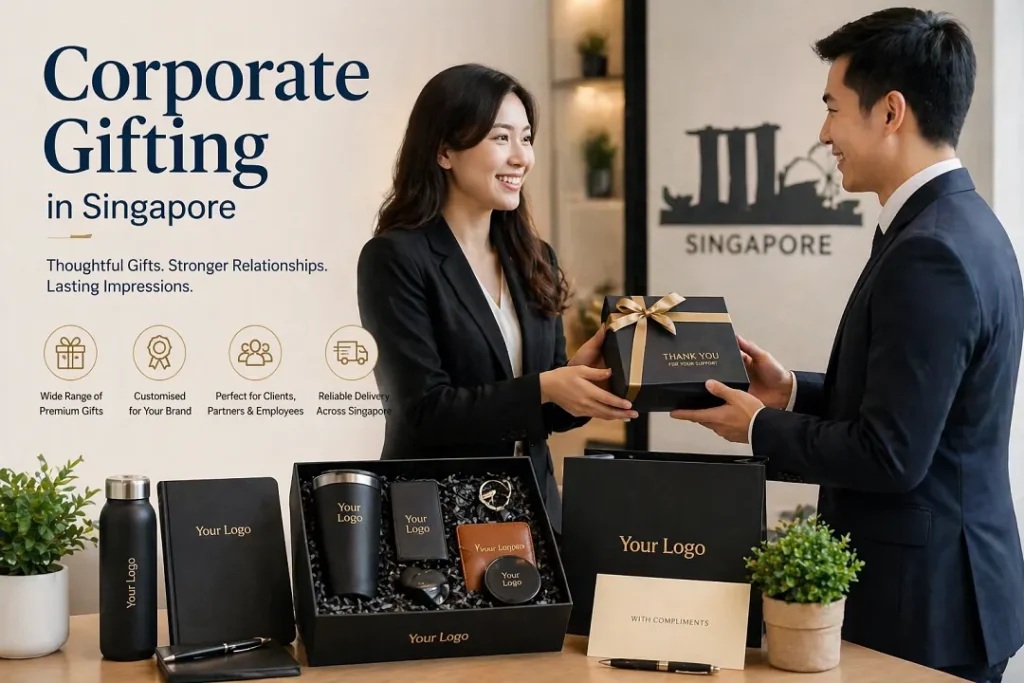
Corporate gifting in Singapore operates under strict S$200 tax thresholds, multicultural sensitivities, and different expectations between SMEs and MNCs. Get these wrong and you’re not just wasting money – you’re damaging relationships. Here’s what actually matters.
The S$200 Tax Rule That Catches Everyone
Singapore has two different S$200 rules and most companies confuse them.
For employee gifts, IRAS states anything under S$200 per occasion isn’t taxable. A wedding gift of S$200 plus a birthday gift of S$50 both stay tax-free because each occasion is separate. But if one gift exceeds S$200, the entire amount becomes taxable income. A S$250 hamper means S$250 of taxable income for the employee, not just the S$50 excess.
For client gifts, GST at 9% applies if your gift costs over S$200 (excluding GST) and you claimed input tax. Here’s where companies mess up: if you send two S$150 hampers to different departments in the same company, IRAS treats this as one S$300 gift to that customer. You owe 9% output tax on S$300 if you claimed input tax on purchase.
Keep records of recipient name, date, cost with GST breakdown, and business purpose. IRAS checks these during audits.
What SMEs Do vs What MNCs Do
The approach to corporate gifting splits sharply between company sizes.
SMEs (under S$100M revenue or fewer than 200 employees) typically allocate S$5,000-15,000 annually for gifting. They order 50-200 pieces per run because that’s vendor minimum order quantities. Most SME owners personally approve every gift decision and favor practical items that stay under the S$150 mark to avoid tax complications. They bundle client and employee gifting into the same order to hit MOQ thresholds and negotiate better pricing. Chinese New Year takes 60-70% of the annual budget because missing CNY gifts damages client relationships more than skipping other festivals.
MNCs operating in Singapore run dedicated procurement teams with S$50,000-500,000+ budgets. They order 500-5,000 pieces and negotiate direct manufacturer contracts to bypass local distributors. MNCs implement formal gift policies with monetary caps (usually S$200-300 for clients, S$50-100 for employees) and require compliance sign-offs before distribution. They maintain segregated budgets for different regions. What goes to Singapore clients differs from Malaysia or Indonesia offices. MNCs also run year-round programs rather than festival-only gifting: quarterly appreciation items, milestone recognition, and wellness initiatives spread across 12 months.
The quality gap shows in customization. SMEs use digital printing on stock items because setup costs are lower. MNCs commission custom molds, embossed packaging, and premium materials because their volume justifies the investment. An SME might spend S$25-40 per gift all-in. An MNC targeting the same recipient tier spends S$60-120.
Singapore vs Malaysia vs Indonesia: What Changes
Singapore companies expanding regionally need to adjust their gifting approach because what works here fails there.
Malaysia runs on stricter Islamic protocols. Corporate gifts must have visible halal certification, not just for food but for personal care items containing alcohol or animal derivatives. Where Singapore companies might include wine in a premium hamper, Malaysian offices replace it with dates, premium chocolates, or specialty teas. Cash gifts in red packets during Hari Raya must be even numbers (S$20, S$50, S$100) but the cultural weight is different. Malaysians expect more modest amounts compared to Singapore’s ang bao culture. Malaysia also has stronger anti-corruption enforcement through the Malaysian Anti-Corruption Commission, so gifts to government-linked clients require documented business justification and stay well under RM500 (roughly S$150).
Indonesia operates with lower price expectations but higher relationship emphasis. What Singapore considers a “basic” S$30 gift hits the mid-tier range in Jakarta. Indonesian business culture values frequent smaller gifts over infrequent expensive ones. Quarterly S$20-30 items build better relationships than annual S$150 hampers. Religious diversity matters more: while Singapore runs Chinese-majority with significant Muslim and Indian minorities, Indonesia is Muslim-majority with regional Christian, Hindu, and Buddhist communities. Timing shifts too. Indonesia celebrates Lebaran (Eid al-Fitr) with more intensity than Singapore’s Hari Raya, and gifts must arrive minimum two weeks before because postal and courier systems are slower.
The practical difference: Singapore MNCs with regional offices maintain three separate gift programs rather than one-size-fits-all. A S$80 item suitable for Singapore clients gets adjusted to S$120-150 for Malaysian counterparts (halal-certified premium) and S$40-60 for Indonesian offices (higher volume, lower unit cost). The cultural taboos stay similar (no clocks, no sharp objects, no sets of four) but execution varies by market purchasing power and religious composition.
Chinese Cultural Rules (Majority Population)
Singapore’s Chinese majority follows specific taboos that kill relationships fast.
Never gift clocks (sounds like “attending a funeral”), knives or scissors (cutting relationships), handkerchiefs (tears and goodbyes), or anything in sets of four (death). White and black wrapping signals mourning. Even numbers work best, especially eight (prosperity). Red and gold packaging is standard during Chinese New Year, not optional styling. Present gifts with both hands. One hand reads as disrespectful even in casual business settings.
For Chinese New Year specifically, order by mid-November because premium vendors book out by December. Delivery must happen 1-2 weeks before the festival. Late delivery signals you forgot and scrambled. Mandarin oranges, premium tea, and custom red packets work reliably. If you’re including alcohol, choose cognac or whiskey over wine. Spirits carry more prestige.
Malay and Muslim Protocols
For Muslim recipients in Singapore’s Malay community, halal certification isn’t negotiable. Food, cosmetics, and personal care products need visible halal labels. Don’t assume something is halal. Check the certification mark. Alcohol is haram (forbidden). Pork and pork derivatives are haram. Non-halal gelatin in candies is haram.
Dates, nuts, and traditional cookies work well during Hari Raya Puasa. Modest presentation matters more than expensive packaging. Don’t expect immediate gift opening. Muslim culture often has recipients wait until later to unwrap. During Ramadan fasting hours, deliver gifts to offices rather than homes to avoid awkward timing.
Indian and Hindu Considerations
Leather goods don’t work for Hindu recipients because cows are sacred. Black or white wrapping during Deepavali (festival of lights) sends wrong signals. Use bright colors like red, yellow, and gold instead.
Sweets, candles, and decorative items suit Deepavali gifting. Vegetarian food options show cultural awareness since many Hindus avoid meat. Odd-number cash gifts (S$51, S$101) carry luck in Indian culture, opposite to Chinese even-number preferences.
What Actually Works Across Cultures
When recipient backgrounds are mixed or unknown, these items avoid cultural landmines.
Premium drinkware (vacuum-insulated tumblers, quality flasks) works universally because hydration has no religious restrictions. Quality notebooks with leather-like covers (synthetic materials, not animal leather) suit all groups. FSC-certified tote bags signal environmental awareness without cultural baggage. Wireless charging pads and power banks are culture-neutral tech accessories. Food hampers work if clearly labeled: halal certification visible, vegetarian options marked, allergen information included.
Avoid personalized items requiring religious or cultural knowledge. Skip anything too personal like perfume or clothing. Don’t gift during first meetings. It reads as bribery. Check recipient company policies because finance, government-linked companies, and healthcare organizations often cap gifts at S$50-100.
Timing the Singapore Calendar
Chinese New Year consumes 40-50% of annual corporate gifting budgets. Hampers, mandarin oranges, and custom red packets are standard. Ordering deadline is mid-November. Miss it and you’re paying 20-30% rush fees or getting rejected entirely. Delivery window is 1-2 weeks pre-festival.
Hari Raya Puasa requires halal-certified hampers delivered before the celebration starts. Dates, traditional cookies (kuih), and non-alcoholic beverages work. The planning timeline is 6-8 weeks.
Deepavali calls for sweets, candles, and bright packaging. Vegetarian options show thoughtfulness. Same 6-8 week planning window.
Christmas and year-end work across all cultures. Tech gadgets, wellness items, and premium hampers are safe. Same supply chain bottlenecks as CNY. Order 6-8 weeks ahead.
For business milestones, gift within one week of deal closures. For company anniversaries, gift during the milestone month. For project completions, gift upon successful delivery.
Current Market Prices
These are what Singapore companies actually pay in 2026, including customization.
Staff tier: S$8-20 for branded pens and notebooks (50-100 pieces), S$20-40 for tumblers and tote bags (100+ pieces), S$40-80 for wireless earbuds and tech accessories (50+ pieces).
Client tier: S$30-60 for regular business contacts, S$60-150 for important partnerships, S$120-300 for VIP relationships and C-suite executives.
Hidden costs add 20-30% on top: logo printing or engraving, presentation boxes (S$3-6 per unit), delivery for bulk orders (S$200-400 for 100+ items), GST output tax if you cross S$200.
Most vendors require 50-100 pieces minimum for custom branding. Digital printing takes 5-7 days with lower minimums. Offset printing takes 14-21 days but gives better results for orders over 500 pieces.
What Works in 2026
Sustainability items are growing because recipients expect them. Bamboo utensils, recycled notebooks, and FSC-certified packaging align with Singapore Green Plan 2030. Companies with public ESG commitments can’t ignore this trend.
Tech accessories in the S$40-80 range remain stable: wireless charging pads, portable power banks, Bluetooth earbuds, smart water bottles. Remote and hybrid workers need functional gear.
Wellness items spiked post-pandemic and stayed high: aromatherapy kits, ergonomic desk accessories, premium tea sets. These signal you care about wellbeing beyond transactions.
Personalized items (engraved journals, monogrammed tumblers) make a S$60 item feel more valuable than a generic S$100 gadget. Customization shows effort.
Skip cheap plastic promotional items (they signal low effort). Skip over-branded items where the logo dominates the design. Skip trendy but impractical items that gather dust. Skip anything that looks discount-bin quality regardless of actual cost.
Frequently Asked Questions
What if I can’t afford to gift everyone in a client organization?
Gift the decision-maker and their supervisor. If budget allows, add the project lead. It’s better to gift 3-4 key people well than to spread the budget thinly across the remaining people.
How do I collect recipient addresses without making it obvious I’m sending gifts?
Ask your sales contact to “update records” or request shipping info for “documentation.” For employees, HR has addresses. Avoid asking the recipient directly.
Do I need to include a card or message with the gift?
Yes. CNY: “Wishing you prosperity” in English and Mandarin. Hari Raya: “Selamat Hari Raya.” General: “Thank you for your partnership.” Keep it brief.
If a client sends me a S$200 gift but I only budgeted S$50 for them, what do I do?
Accept graciously. Reciprocate at the next festival or milestone. You don’t need to match value immediately. Not reciprocating at all damages relationships, not the price gap.
I’m a new business. Do I need to start corporate gifting in year 1?
No. Wait until you’ve closed deals and built relationships. Gifting during first meetings reads as bribery. Start in year 2 with repeat clients at CNY or year-end
Contributed by
MeowPrint is a custom printed merchandise and corporate gifts company based in Singapore. Since 2015, the team has completed thousands of projects for schools, startups, SMEs, and government agencies. MeowPrint writes to help businesses make better decisions when it comes to branding and gifting.
Location: 8 Boon Lay Wy, #07-15, Singapore 609964