
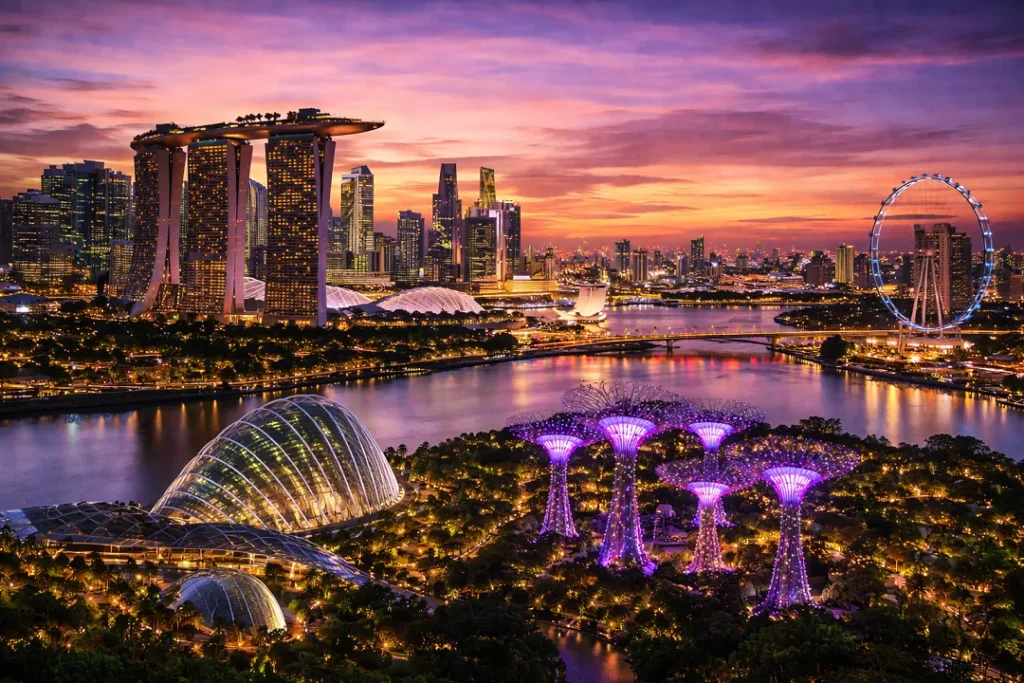
Planning a trip to Southeast Asia’s most modern city? Understanding the best time to visit Singapore helps you maximize good weather, avoid peak crowds, and align your travel goals with seasonal events.
Many travellers ask, when is the best time to visit Singapore? The answer depends on what you prioritize sunny beach days, shopping festivals, budget-friendly travel, or festive celebrations.
Singapore is a year-round destination thanks to its tropical climate and excellent infrastructure. However, certain months offer clearer skies, lower rainfall, or better travel deals.
This comprehensive guide explains Singapore’s seasonal patterns, peak periods, and a detailed month-by-month breakdown to help you decide what is the best time to visit Singapore for your travel style.
Singapore’s Climate Overview
Singapore has a tropical rainforest climate. This means it is warm and humid throughout the year, with temperatures typically ranging between 25°C and 32°C. There are no distinct four seasons like in temperate countries.
Rainfall is spread across the year, though certain months experience heavier monsoon showers. Because of the consistent climate, Singapore’s best time to visit often depends more on rainfall patterns and tourism seasons than temperature changes.
When Is the Best Time to Visit Singapore?
The best time to visit Singapore is from February to April, when the weather is relatively drier and slightly less humid. This period offers pleasant conditions for sightseeing, outdoor attractions, and festivals. However, Singapore is a year-round destination, with vibrant events, shopping, and dining experiences available in every season.
Best Weather (Dry & Sunny): February to April
If you are seeking sunshine and relatively lower rainfall, February to April is widely considered the best time to visit Singapore. These months typically offer clearer skies and slightly lower humidity levels compared to the monsoon season.
Outdoor attractions such as Sentosa, Marina Bay waterfront walks, and Gardens by the Bay are especially enjoyable during this period. Beach activities and rooftop dining experiences are more comfortable when rainfall is less frequent.
This period is ideal for travellers who prioritise outdoor exploration and photography.
Best for Budget Travel: August to October
If affordability is your main concern, August to October may be the best time of year to visit Singapore. Tourist numbers are generally lower during this period, which can lead to more competitive hotel rates and travel deals.
While occasional rain showers may occur, they are usually brief and followed by sunshine. Budget-conscious travellers often find better accommodation prices and fewer crowds at major attractions.
Best for Shopping: Late May to July
Singapore is famous for retail experiences. Late May to July coincides with the Great Singapore Sale, making it an excellent time for shopping enthusiasts.
Major malls along Orchard Road and luxury boutiques across the city offer attractive promotions. Visitors who enjoy fashion, electronics, and lifestyle products often plan trips during this sale season.
Although temperatures can be hot during these months, Singapore’s air-conditioned malls make shopping comfortable despite the heat.
Peak Season: November to January and June to July
Peak tourist season occurs from November to January, coinciding with festive celebrations such as Christmas and New Year. Streets are beautifully decorated, especially around Orchard Road, and the city feels vibrant and celebratory.
However, this period also overlaps with the Northeast monsoon, which brings heavier rainfall. Travellers should expect occasional downpours.
Another peak period occurs in June and July due to international school holidays. Hotel rates may rise during these months, and attractions can be busier.
Rainy Season: November to January
The Northeast monsoon typically affects Singapore between November and January. During this period, rainfall is heavier and may last longer compared to other months.
However, rain rarely disrupts travel plans significantly. Singapore’s infrastructure is well-prepared for rain, and many attractions are indoors or sheltered.
Travellers who enjoy festive atmospheres may still consider this season despite the increased rainfall.
Month-by-Month Breakdown
February to April
These are often the sunniest months with lower rainfall. Outdoor attractions such as Sentosa beaches and rooftop pools are particularly enjoyable. Many consider this period the overall best time to visit Singapore for balanced weather conditions.
May to June
These months are typically hotter and more humid. While outdoor activities may feel warmer, shopping season peaks during this time. Indoor attractions provide relief from the heat.
July to October
Rainfall remains moderate, though humidity can still be high. Tourist crowds are generally lighter compared to peak festive periods. This makes it attractive for travellers seeking fewer crowds.
November to January
These months bring heavier monsoon rains. However, the festive spirit, especially around Christmas and New Year, creates a lively atmosphere. Decorative lights, seasonal events, and shopping promotions enhance the experience.
Important Considerations Before Planning
Weather Conditions
Singapore remains hot and humid year-round. Even during the “dry” months, brief tropical showers can occur. Lightweight clothing, sunscreen, and hydration are essential.
Because temperature variation is minimal, packing decisions depend more on rainfall preparedness than cold weather gear.
Haze Season
Occasionally, haze may occur during certain summer months due to regional forest fires. While it does not happen every year, travellers sensitive to air quality should monitor updates if visiting during mid-year.
Activities Available Year-Round
One reason Singapore is a strong year-round destination is its abundance of indoor attractions. Air-conditioned malls, museums, theme parks, and entertainment complexes ensure that rainy days do not disrupt travel plans.
Attractions such as Universal Studios Singapore and indoor shopping centres provide entertainment regardless of weather conditions.
What Is the Best Time of Year to Visit Singapore Overall?
If your priority is ideal weather, February to April is often considered the best time of year to visit Singapore.
If you prefer festive vibes and don’t mind rain, November to January offers a lively atmosphere.
For shopping enthusiasts, late May to July is attractive due to seasonal sales.
Budget travellers may find August to October offers better accommodation deals and fewer crowds.
Ultimately, the best time to visit Singapore depends on your travel goals rather than temperature differences.
Final Thoughts
The best time to visit Singapore ultimately depends on what you value most in your trip. For clear skies and outdoor adventures, February to April is ideal. For shopping enthusiasts, late May to July stands out. Budget travellers may prefer August to October, while festive lovers enjoy November to January.
Because Singapore offers world-class infrastructure, diverse attractions, and reliable public transport, it remains a destination worth visiting at any time of year. Careful planning based on your preferences ensures you experience the city at its best.
Frequently Asked Questions
When is the best time to visit Singapore for good weather?
February to April typically offers the sunniest and driest conditions.
What is the best time to visit Singapore for shopping?
Late May to July during the Great Singapore Sale.
Is Singapore good to visit during the rainy season?
Yes. Although November to January sees heavier rainfall, the city offers many indoor attractions and festive events.
Is Singapore hot all year round?
Yes. Temperatures generally range between 25°C and 32°C with high humidity year-round.