

Singapore is widely regarded as one of the most investor-friendly countries in the world. With strong regulatory frameworks, political stability, and a well-developed financial ecosystem, it attracts foreign investors looking for both short-term opportunities and long-term wealth growth. If you’re wondering how to invest in Singapore for foreigners, this guide breaks down the options, requirements, and strategies in a clear and practical way.
Whether you are new to investing or exploring diversification outside your home country, Singapore offers flexible entry points across property, stocks, funds, and digital platforms.
Why Foreigners Choose to Invest in Singapore
Singapore is widely recognised as one of the most attractive destinations for foreign investment. Its strong economic fundamentals, investor-friendly regulations, and strategic position in Asia make it a preferred choice for entrepreneurs, multinational companies, and high-net-worth individuals.
One of the main reasons foreigners invest in Singapore is its political and economic stability. The country is known for transparent governance, low corruption, and a reliable legal system based on English common law. These factors provide investors with long-term confidence and protection for their assets and intellectual property.
Singapore also offers a highly competitive tax environment. Corporate income tax is capped at 17%, with no capital gains tax or dividend tax. In addition, Singapore has an extensive network of Double Taxation Avoidance Agreements, allowing foreign investors to minimise tax exposure across multiple jurisdictions.
Its strategic location in Southeast Asia allows businesses to access fast-growing markets such as China, India, Indonesia, and Vietnam. Many foreign companies use Singapore as their regional headquarters due to its excellent connectivity, world-class port, and efficient airport infrastructure.
Ease of doing business is another key advantage. Company incorporation is quick and straightforward, with clear regulations and strong government support for foreign enterprises. Most sectors allow 100% foreign ownership, making it easy for investors to retain full control of their businesses.
Singapore’s skilled, multilingual workforce further strengthens its appeal. English is the main business language, and the talent pool is highly educated with international exposure. Combined with a robust financial ecosystem and high quality of life, Singapore continues to be a top global investment hub for foreigners.
These advantages make Singapore suitable for both conservative and growth-oriented investors.
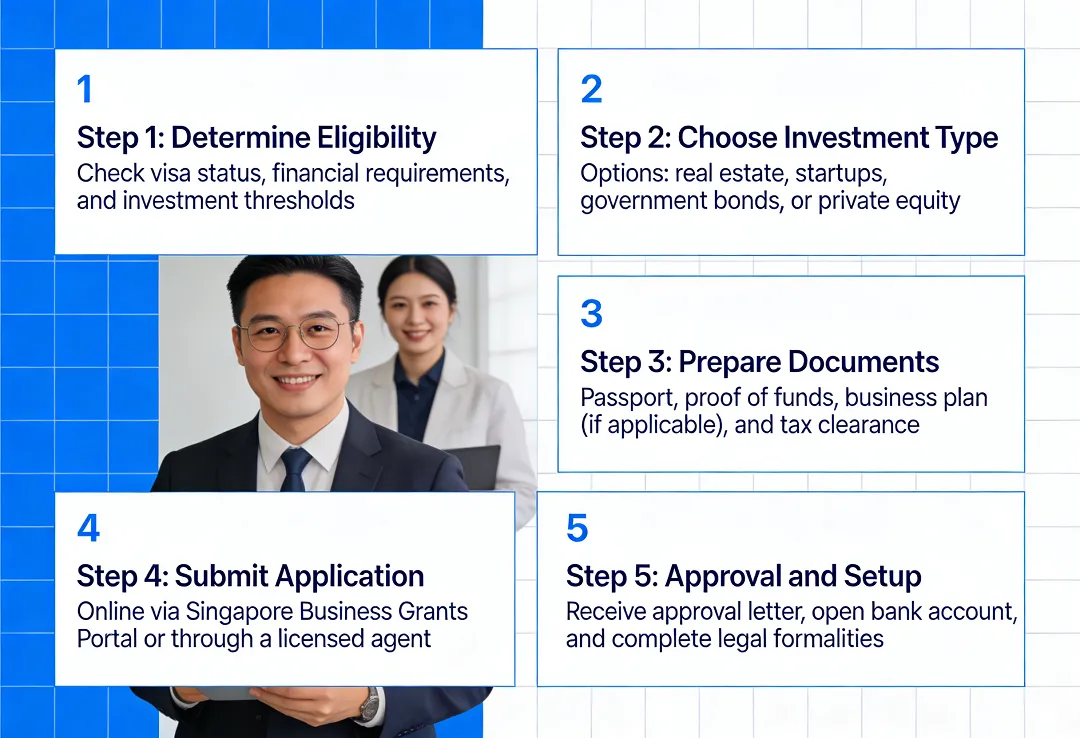
How to Start Investing in Singapore as a Foreigner
Before investing, foreigners should take a few essential foundational steps to ensure a smooth and compliant process. This includes understanding local regulations, choosing the right investment structure, and opening the necessary bank or brokerage accounts. Seeking professional advice can also help investors manage risks, optimise returns, and make informed decisions within Singapore’s well-regulated financial environment.
1. Understand Your Residency Status
Foreigners can invest in Singapore whether they are:
- Non-residents.
- Employment Pass holders.
- Permanent Residents.
Some investments (like property) have restrictions depending on residency.
2. Open a Bank or Brokerage Account
Most investments require:
- A Singapore bank account (for local platforms).
- Or an international brokerage with access to SGX (Singapore Exchange).
Documents usually include:
- Passport.
- Proof of address.
- Tax identification number (if required).
3. Define Your Investment Goals
Clarify whether your goal is:
- Capital growth.
- Passive income.
- Portfolio diversification.
- Long-term wealth preservation.
This helps determine the best investment in Singapore for beginners versus experienced investors.
Best Investment Options in Singapore for Foreigners
Singapore offers a diverse range of investment avenues that cater to different budgets and risk appetites. From low-risk options such as fixed deposits and government bonds to higher-growth opportunities like stocks, real estate, and startups, investors can choose strategies that align with their financial goals. This flexibility makes Singapore an attractive destination for both conservative and growth-focused investors.
1. Stocks and Exchange-Traded Funds (ETFs)
Investing in Singapore-listed stocks or ETFs is one of the easiest ways to enter the market.
Why it’s popular:
- Access to Asian and global companies.
- Relatively low entry cost.
- High liquidity.
ETFs are especially suitable for beginners looking for diversification with lower risk.
2. Real Estate Investment Trusts (REITs)
Singapore REITs are globally recognised for transparency and consistent dividends.
Benefits:
- No need to buy physical property.
- Lower capital requirement.
- Regular income payouts.
REITs are often considered among the best investment options in Singapore for foreign investors seeking passive income.
3. Property Investment in Singapore
How to invest in Singapore property with little money
Direct property ownership can be expensive due to high prices and additional buyer’s stamp duty for foreigners. However, alternatives exist:
- REITs (property exposure without ownership).
- Fractional real estate platforms.
- Property-focused funds.
These options allow foreigners to benefit from Singapore’s property market without heavy upfront costs.
4. Robo-Advisors and Wealth Management Platforms
Singapore is home to advanced digital investment platforms that offer automated portfolio management.
Ideal for:
- Beginners.
- Busy professionals.
- Long-term passive investors.
These platforms usually invest in diversified ETFs based on your risk profile.
5. Fixed Income and Bonds
Foreigners can invest in:
- Corporate bonds.
- Bond funds.
- Singapore dollar-denominated bond ETFs.
These options suit conservative investors prioritising capital preservation.
6. Alternative Investments
More experienced investors may explore:
- Private equity funds.
- Venture capital exposure.
- Crowdfunding platforms.
These carry higher risk but offer potential for higher returns.
Best Investment in Singapore for Beginners
Singapore offers several beginner-friendly investment options that balance safety, returns, and long-term growth. One of the best choices for beginners is Singapore Savings Bonds (SSBs). They are government-backed, low-risk, and provide predictable returns with flexible withdrawal options.
Another popular option is Exchange-Traded Funds (ETFs) listed on the Singapore Exchange (SGX). ETFs allow beginners to invest in a diversified portfolio of stocks or bonds with relatively low capital and lower risk compared to individual stocks.
For those seeking steady income, blue-chip stocks in Singapore, such as banks and established companies, are ideal due to their strong fundamentals and consistent dividend payouts. Beginners can also consider Robo-advisors, which offer professionally managed portfolios based on individual risk profiles.
Overall, Singapore’s stable economy, strong regulations, and wide range of accessible investment options make it an excellent place for beginners to start building wealth with confidence.
Tax Considerations for Foreign Investors
Singapore is highly attractive to foreign investors due to its clear, competitive, and transparent tax system. One of the biggest advantages is that there is no capital gains tax, meaning profits from the sale of shares or investments are generally not taxed. In addition, dividends paid by Singapore companies are tax-free in the hands of shareholders, including foreigners.
Corporate income tax in Singapore is capped at 17%, and various tax incentives and exemptions may further reduce the effective tax rate for qualifying businesses. Singapore also does not impose withholding tax on dividends, although certain payments such as interest, royalties, or technical service fees may be subject to withholding tax, depending on the nature of the transaction.
Another key benefit is Singapore’s extensive network of Double Taxation Avoidance Agreements (DTAs) with many countries. These treaties help foreign investors avoid being taxed twice on the same income and may reduce withholding tax rates.
While Singapore’s tax regime is investor-friendly, foreign investors should still seek professional tax advice to ensure compliance with local regulations and optimise their tax structure effectively.
Risks to Consider When Investing in Singapore
While Singapore is widely regarded as a safe and attractive investment destination, investors should still be aware of certain risks before committing capital. One key consideration is market volatility. Like any global financial hub, Singapore’s stock market and property sector can be affected by global economic slowdowns, interest rate changes, and geopolitical events.
Another risk is regulatory and policy changes. Although Singapore is known for stable governance, updates to tax policies, property cooling measures, or foreign investment rules can impact returns, especially for real estate and highly regulated industries.
Currency risk is also important for foreign investors. Fluctuations in the Singapore dollar against other currencies may affect investment returns when funds are repatriated. This is particularly relevant for short-term investments.
Additionally, high entry costs can be a challenge. Singapore’s real estate prices, business setup costs, and operating expenses are among the highest in Asia, which may limit profitability for some investors.
Lastly, sector-specific risks exist, especially in finance, technology, and property, where competition is intense. Conducting thorough due diligence and seeking professional advice can help investors manage these risks effectively.
Conclusion
Understanding how to invest in Singapore for foreigners opens the door to one of Asia’s most secure and sophisticated financial markets. From beginner-friendly ETFs and robo-advisors to REITs and property-linked investments, Singapore offers flexible options for every investor profile. With proper planning, diversification, and awareness of regulations, foreign investors can build a resilient and rewarding investment portfolio in Singapore.
FAQs: How to Invest in Singapore for Foreigners
1. Can foreigners legally invest in Singapore?
Yes, foreigners are allowed to invest in most financial instruments in Singapore.
2. What is the best investment in Singapore for beginners?
ETFs, robo-advisors, and REITs are ideal for beginners due to diversification and lower risk.
3. Can foreigners buy property in Singapore?
Foreigners face restrictions on residential property but can invest via REITs or approved developments.
4. How much money do I need to start investing in Singapore?
You can start with a few hundred dollars through ETFs or robo-advisors.
5. Is investing in Singapore safe?
Singapore is considered one of the safest investment destinations due to strong regulation and stability.
6. Do foreigners pay tax on investments in Singapore?
There is no capital gains tax, but specific income types may have withholding tax.