
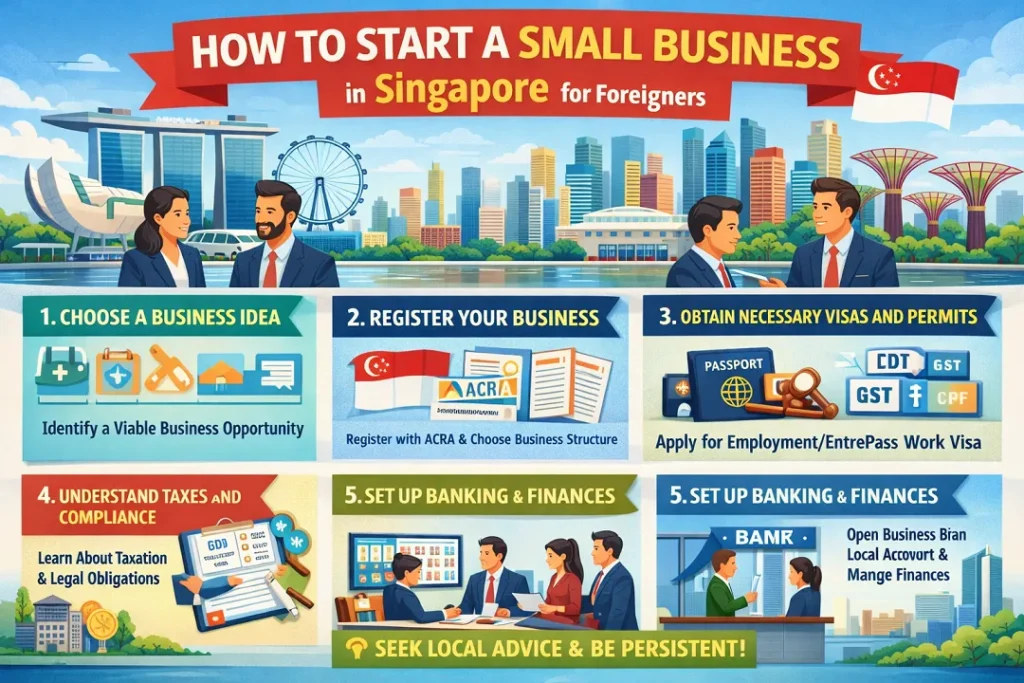
Singapore is one of the most business-friendly countries in the world, making it an attractive destination for foreign entrepreneurs. With a strong legal framework, low corporate taxes, and access to global markets, many international founders are interested in learning how to start a small business in Singapore for foreigners.
However, starting a business as a non-resident involves understanding legal requirements, company structures, visa options, and compliance obligations. This guide explains everything foreigners need to know from eligibility and registration to costs and long-term business planning.
Why Singapore Is Ideal for Foreign Entrepreneurs
Singapore consistently ranks among the top countries for ease of doing business. Foreigners choose Singapore to start a business because of:
- Political and economic stability.
- Transparent legal and regulatory systems.
- Competitive corporate tax rates.
- Strategic location in Asia.
- Strong banking and financial infrastructure.
- No restrictions on foreign ownership in most sectors.
These advantages make Singapore a preferred hub for startups, SMEs, and international expansion.
How Can Foreigners Start a Business in Singapore?
Foreigners are legally allowed to own and operate businesses in Singapore, but they must comply with specific regulations. While 100% foreign ownership is permitted, certain conditions apply when managing the business locally.
Foreigners can:
- Fully own a Singapore company.
- Act as shareholders.
- Appoint local directors or nominees if required.
- Apply for business-related visas to operate the company.
Understanding these rules is essential before proceeding.
Types of Business Structures Available in Singapore
Before starting a small business in Singapore as a foreigner, it is important to choose the right business structure.
Private Limited Company (Pte Ltd)
This is the most popular option for foreigners. It offers:
- Separate legal entity status.
- Limited liability protection.
- Tax efficiency.
- High credibility with banks and investors.
A Private Limited Company can be 100% foreign-owned but must appoint at least one locally resident director.
Sole Proprietorship or Partnership
These structures are generally not suitable for foreigners unless they have a valid work pass, as the owner must be locally resident.
For most foreign entrepreneurs, a Private Limited Company is the preferred choice.
What Are the Requirements to Start a Business in Singapore?
Understanding what are the requirements to start a business in Singapore helps avoid delays and compliance issues.
Key requirements include:
- A unique company name approved by authorities.
- At least one shareholder (individual or corporate).
- At least one locally resident director.
- A registered Singapore office address.
- A company secretary is appointed within six months.
- Minimum paid-up capital (as low as SGD 1).
Foreigners who do not reside in Singapore usually appoint a nominee director to meet local director requirements.
Step-by-Step Guide: How to Start a Small Business in Singapore for Foreigners
Step 1: Decide on Your Business Activity
Clearly define your business model, industry, and activities. Some industries, such as finance, education, or healthcare, may require additional licenses.
Step 2: Register Your Company Name
The company name must be:
- Unique and not identical to existing businesses.
- Not misleading or offensive.
- Relevant to your business activity.
Name approval is usually quick unless the name requires referral to a regulatory authority.
Step 3: Incorporate the Company
Once the name is approved, company incorporation typically includes:
- Submitting shareholder and director details.
- Declaring business activities.
- Issuing share capital.
- Providing a registered office address.
The incorporation process is efficient and often completed within a few days.
Step 4: Appoint a Local Director
Foreigners who are not Singapore residents must appoint at least one local director. This can be:
- A Singapore citizen.
- A permanent resident.
- A valid work pass holder.
Many foreigners use professional nominee director services until they secure their own work pass.
Step 5: Open a Corporate Bank Account
A corporate bank account is required for business transactions. Banks typically request:
- Company incorporation documents.
- Director and shareholder identification.
- Business plans or projected activities.
Some banks allow remote account opening, while others require physical presence.
Business Visas for Foreign Entrepreneurs
To actively manage the business in Singapore, foreigners need a valid visa.
EntrePass
The EntrePass is designed for foreign entrepreneurs who plan to operate innovative or venture-backed businesses in Singapore.
Employment Pass (EP)
Foreign business owners often apply for an Employment Pass sponsored by their own company, provided salary and qualification requirements are met.
Choosing the right visa depends on the nature of the business and long-term plans.
Costs of Starting a Business in Singapore
The cost of starting a small business in Singapore as a foreigner varies depending on services used.
Typical expenses include:
- Company incorporation fees.
- Nominee director services.
- Company secretary fees.
- Registered address services.
- Visa application fees.
- Bank account setup costs.
While Singapore is not the cheapest place to start a business, the long-term benefits often outweigh the initial investment.
Taxation for Foreign-Owned Businesses
Singapore offers a competitive tax environment for startups.
Key points include:
- Corporate tax capped at 17%.
- Tax exemptions for new startups.
- No capital gains tax.
- No dividend tax.
Proper tax planning helps foreign entrepreneurs maximise profitability and compliance.
Common Challenges Foreigners Face
Despite its business-friendly environment, foreigners may face challenges such as:
- Understanding local compliance requirements.
- Visa eligibility and renewals.
- Opening bank accounts.
- Meeting ongoing regulatory obligations.
Working with professional service providers helps mitigate these challenges.
Tips for Foreigners Starting a Business in Singapore
To increase your chances of success:
- Conduct market research before incorporation
- Choose the right business structure.
- Ensure compliance from day one.
- Maintain proper accounting records.
- Understand local business culture.
Preparation is key to long-term sustainability.
Final Thoughts
Understanding how to start a small business in Singapore for foreigners involves more than just company registration. It requires strategic planning, regulatory compliance, and long-term vision.
With its transparent regulations, strong economy, and global connectivity, Singapore remains one of the best places for foreigners to start and grow a business. By following the correct steps and seeking professional guidance where needed, foreign entrepreneurs can build a successful and sustainable business in Singapore.
Frequently Asked Questions
How to start a small business in Singapore for foreigners?
Foreigners can start a business by registering a Private Limited Company, appointing a local director, opening a bank account, and obtaining a valid business visa.
Can foreigners fully own a company in Singapore?
Yes. Singapore allows 100% foreign ownership in most industries.
What are the requirements to start a business in Singapore?
Key requirements include a registered company, a local director, a Singapore address, a company secretary, and minimum paid-up capital.
Do foreigners need to live in Singapore to start a business?
No. Foreigners can own a business remotely, but a valid work pass is required to manage it locally.
How long does it take to start a business in Singapore?
Company incorporation typically takes a few days once documents are ready and approved.