
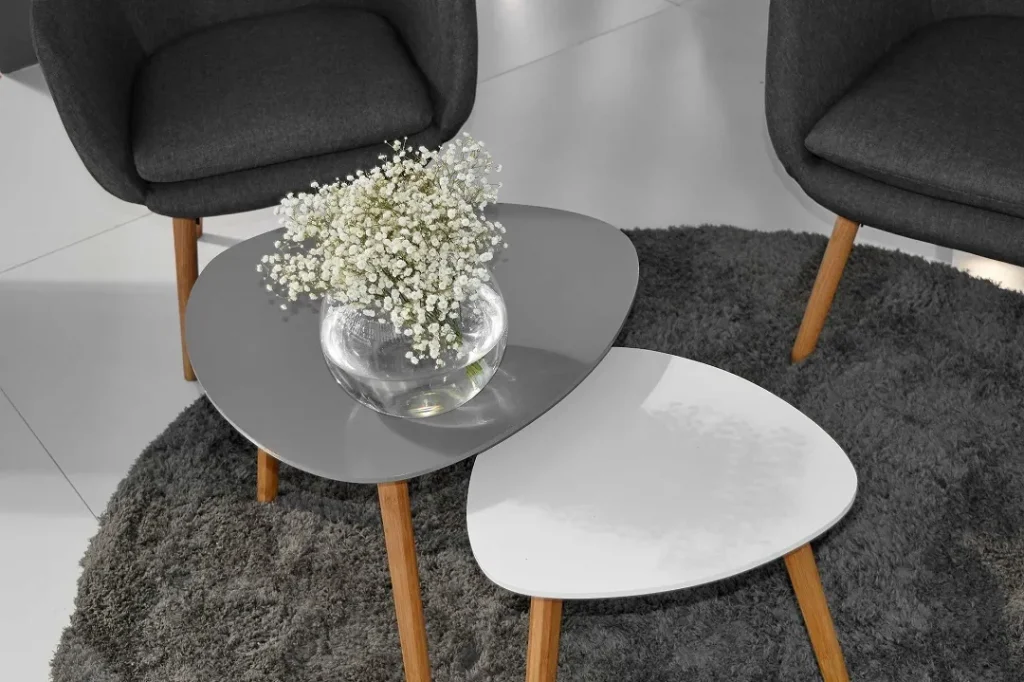
Here’s the thing about large living rooms: they sound enviable until you’re standing in the middle of one, staring at a sectional that somehow looks lost despite occupying half the room. Getting furniture to feel grounded, purposeful, and visually settled is genuinely harder than most people expect. According to Houzz, 21% of homeowners are actively tackling living room projects right now, and millions of people are navigating the exact same frustration. The right end table for large living room arrangements can be the thing that finally makes everything click.
Placement First, Everything Else Follows
Most people skip straight to shopping. Don’t. Placement is where the real transformation happens, and getting it wrong costs you more than a bad-looking room; it costs you daily comfort.
A well-chosen end table doesn’t just give you somewhere to rest your coffee. It visually anchors the seating and stops furniture from looking like it’s drifting in open water.
Before we get into sizing, it’s worth knowing that a wide range of thoughtfully designed living room end tables can serve as intentional anchors for all kinds of furniture configurations, whether you’re working with a classic sofa, an L-shaped sectional, or a statement reading chair.
Besides Sofas and Sectionals
Place end tables at the ends of your seating runs, not somewhere randomly adjacent. For sectionals specifically, start by anchoring the main seating arm, not the corner. This distributes visual weight intentionally and gives the entire zone a defined beginning and end.
Clearance That Actually Matters
Leave at least 18 inches of walking clearance around each table. And test the reach, your arm should access the surface comfortably without any awkward leaning. That ergonomic detail sounds minor until you’re doing it fifty times a day.
Getting the Size and Scale Right
A perfectly placed table can still wreck a room’s harmony if the proportions are off. In large rooms, these errors are almost painfully obvious, so the numbers genuinely matter here.
Height Is Everything
Keep your end table within two inches of your sofa’s armrest height. Go too low, and the table reads like an afterthought. Too tall, and it starts functioning as a visual barrier. That two-inch window handles most standard sofas and keeps sightlines clean across the room.
Surface Area You Can Actually Use
Planning to put a lamp on it? You’ll need a table that’s at least 22 inches in diameter. That’s the minimum for a lamp plus a drink or remote without things feeling cramped, particularly important next to oversized furniture where scale mismatches are magnified.
Depth and Traffic Flow
For large rooms, lean toward shallower table depths in the 14–16 inch range. They preserve open flow without sacrificing usable surface area. Deep tables in active walkways create constant friction, visually and physically, and you’ll notice it every single day.
Material, Shape, and Style That Don’t Fight the Room
Choosing stylish end tables furniture pieces is less about finding something beautiful in isolation and more about what actually works beside a large sectional without either disappearing or overwhelming everything around it.
What Different Materials Do
Wood tones add warmth and visual weight beside upholstered sofas; they feel deliberate. Glass and metal create lightness, which helps in larger rooms where you want airiness without that uncomfortable emptiness.
Shape Has a Job to Do
Round tables soften traffic flow around bulky furniture, with no sharp corners catching eyes or shins. Rectangular tables complement straight-lined modern sofas naturally. Console-style or dual-tier options work remarkably well in expansive open plans where a standard-sized table can look like it shrunk in the wash.
When One Table Can Be a Statement
A live-edge or sculptural end table can do serious design work in a large room. Used intentionally, it becomes functional art, anchoring a stretch of neutral furniture without demanding a full redesign around it.
Multi-Functional Tables for Rooms That Need to Work Harder
Large living rooms require furniture that earns its floor space. Following these living room side table tips helps you choose genuinely useful pieces, not just visually pleasing.
Storage and charging: Drawers, lower shelves, and integrated wireless charging keep surfaces tidy and tech-functional. In open rooms, clutter spreads faster than you’d think; built-in storage solves that problem quietly.
Layered formats: Two-tier tables and C-shaped side tables offer display space on top and practical utility below. Particularly smart beside sectionals, where multiple people need landing spots but you don’t want an obstacle course of furniture.
Styling That Makes the Room Feel Finished
Styling is where a well-furnished room becomes one that feels genuinely considered. These living room side table tips and stylish end tables furniture choices are simpler than most people think.
Minimalist arrangement wins: A lamp, a tray, a small plant, that’s frequently all you need. In large rooms, restraint reads as sophistication. Overcrowding a table makes the surrounding furniture look chaotic by comparison.
Texture and odd numbers: Group accessories in sets of 3 and vary heights. A smooth lamp base beside a woven tray or a matte ceramic vase creates contrast, giving the arrangement visual interest without looking busy.
Lamps do more than light: Table lamps soften the harsh zones that overhead lighting creates in large rooms. They also add visual weight to corners and seating ends, creating balance without moving a single piece of furniture.
Layout Formulas Worth Knowing
| Scenario | Recommended Approach |
| Long sofa, symmetrical room | Two matching end tables, one on each end |
| L-shaped sectional | One table at the main arm, one console-style piece at the corner |
| Open floor plan | One end table + floor lamp combo on the open side |
| Mixed seating arrangement | Mismatched tables tied together by matching finish or height |
Matching vs. mismatched: You don’t need identical pieces; you need visual consistency. Matching height or finish is almost always enough. A wood table and a metal table at the same height read as curated, not accidental.
Spacing that works: If you have to lean forward to reach your drink, the placement is wrong. That 18-inch proximity rule keeps everything connected even in the most open layouts.
What’s Changing in End Table Design
The world of living room end tables is evolving quickly. Smart tables with integrated wireless charging and Bluetooth speakers are gaining serious traction. Mixed-material hybrids, metal legs, wood tops, and glass shelves are increasingly popular in large rooms that need visual layering. Sculptural live-edge pieces are being positioned as functional art that anchors seating arrangements without competing for attention.
Total home accents sales are estimated to reach $86.1 billion, up 1.2% over 2024, a signal that people are still investing meaningfully in the details that make rooms feel complete rather than assembled.
Closing Thoughts
Choosing the right end table for large living room arrangements isn’t a small call; it’s genuinely one of the fastest ways to turn a space that feels disconnected into one that feels considered. Scale, placement, material, and function all contribute. Start with the measurements, trust the proportions, and let the room tell you the rest. The right table doesn’t just sit there; it makes everything around it make sense.
Frequently Asked Questions
What is the four-inch rule for living room seating?
Keep the seat heights of sofas and chairs within approximately four inches of each other; this creates a visually harmonious arrangement where nothing looks awkward or disproportionate.
How many end tables does a large living room need?
Most large rooms work well with two, one at each end of the primary sofa. For sectionals or open plans, one strong table paired with a floor lamp or console often creates equally intentional balance.
Can mismatched end tables look cohesive?
Absolutely. Match the finish or height, and two entirely different styles will read as deliberate, not disorganized.
Are storage end tables too bulky for large spaces?
Not when chosen well. In open rooms, storage tables actually help contain clutter that would otherwise spread. Opt for clean lines, and the storage feels purposeful rather than heavy.
What shape works best for high-traffic zones?
Round tables, no sharp corners, forgiving in busy walkways. For rooms with wider-open paths, rectangular or console-style tables work without disrupting flow.