
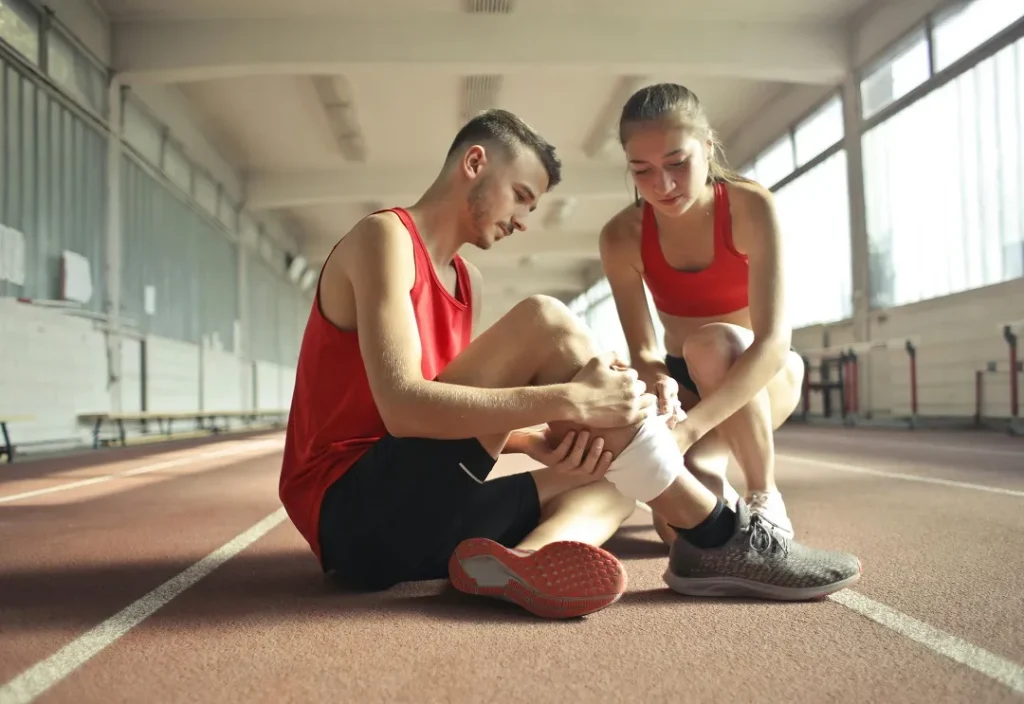
Knee stability depends on the coordinated function of ligaments, cartilage, muscles, tendons, and surrounding joint structures. Among the most important stabilizing structures are the anterior cruciate ligament and posterior cruciate ligament. Injuries involving these ligaments can significantly affect joint mechanics, mobility, and long-term knee health.
Athletes commonly sustain ligament injuries during pivoting, jumping, sudden deceleration, or direct impact. However, knee instability may also develop gradually after incomplete rehabilitation, delayed diagnosis, or repeated microtrauma. Over time, untreated instability can contribute to cartilage degeneration, recurrent falls, meniscal injury, and osteoarthritis.
Patients evaluating symptoms related to ACL and PCL knee conditions often report instability rather than pain alone. Understanding early warning signs and appropriate management strategies may help reduce chronic complications and preserve long-term joint function.
Understanding ACL and PCL Injuries
The knee contains four major ligaments, but the cruciate ligaments are particularly important for stabilizing forward and backward movement.
Anterior Cruciate Ligament
The ACL primarily prevents excessive forward movement of the tibia relative to the femur. It also contributes to rotational stability.
ACL injuries frequently occur during:
- Sudden pivoting
- Rapid directional changes
- Landing awkwardly from jumps
- Non-contact twisting injuries
Sports commonly associated with ACL injury include football, basketball, skiing, soccer, and volleyball.
Posterior Cruciate Ligament
The PCL prevents excessive backward movement of the tibia.
PCL injuries often result from:
- Direct impact to the front of the knee
- Dashboard injuries during motor vehicle accidents
- Falls onto a bent knee
- Hyperflexion injuries
PCL injuries are generally less common than ACL injuries but may still contribute to chronic instability if untreated.
Early Signs Many People Ignore
Some ligament injuries initially appear mild despite substantial structural damage.
A Popping Sensation
Many patients with ACL injuries describe hearing or feeling a pop during the injury event.
Swelling Within Several Hours
Rapid swelling often indicates bleeding within the joint, known as hemarthrosis.
Feeling of Knee “Giving Way”
Instability episodes are a key indicator of ligament insufficiency. Patients may feel the knee buckle during walking, pivoting, or descending stairs.
Difficulty Trusting the Knee
Some individuals unconsciously avoid certain movements because the knee feels unreliable even when pain is minimal.
Recurrent Minor Injuries
Untreated instability increases the likelihood of repeated meniscal or cartilage injury over time.
Pain During Rotational Movement
Twisting motions may provoke discomfort more than straight-line walking.
Screening, Prevention, and Early Detection
Prompt assessment may reduce secondary joint damage.
Clinical evaluation often includes:
- Lachman test
- Posterior drawer test
- Pivot shift test
- Range-of-motion assessment
- Gait evaluation
- MRI imaging
Magnetic resonance imaging is commonly used to assess ligament integrity, meniscal injury, cartilage damage, and associated bone bruising.
Risk Factors for Knee Ligament Injury
Several factors may increase injury risk:
- Previous ligament injury
- Poor neuromuscular control
- Muscle imbalance
- Female sex in certain sports
- Fatigue
- Inadequate warm-up
- Improper landing mechanics
Injury Prevention Programs
Structured neuromuscular training programs may reduce ACL injury risk by approximately 30% to 50% in some athletic populations.
Preventive strategies often include:
- Plyometric training
- Balance exercises
- Strengthening programs
- Landing mechanics training
- Core stabilization
- Agility drills
Early rehabilitation after injury is also important for minimizing long-term instability.
Daily Care and Lifestyle Impact
Chronic knee instability may affect more than athletic performance.
Patients often report difficulty with:
- Climbing stairs
- Running
- Squatting
- Carrying heavy objects
- Sudden directional changes
- Recreational sports
- Prolonged walking
Repeated instability episodes may also contribute to fear of movement and reduced physical activity.
Lifestyle modifications during recovery often include:
- Activity modification
- Structured physiotherapy
- Weight management
- Use of knee braces in selected cases
- Low-impact exercise such as cycling or swimming
Muscle strengthening around the knee, particularly involving the quadriceps and hamstrings, plays a major role in compensatory stabilization.
Age-Related and Chronic Conditions Linked to Knee Instability
Several chronic or degenerative conditions may worsen instability symptoms.
Osteoarthritis
Repeated ligament instability can accelerate cartilage wear and increase osteoarthritis risk.
Long-term studies suggest that radiographic osteoarthritis may develop in 40% to 80% of patients within 10 to 20 years following significant ACL injury, particularly when associated meniscal damage occurs.
Meniscal Tears
Instability increases stress on the menisci, which function as shock absorbers within the knee.
Muscle Weakness
Age-related sarcopenia and reduced muscle conditioning may impair joint stabilization.
Obesity
Higher body weight increases mechanical stress across unstable knee joints.
Inflammatory Arthritis
Chronic inflammation may contribute to ligament laxity and progressive joint degeneration.
Prescription Versus Over-the-Counter Treatments
Management depends on injury severity, patient age, activity level, and instability symptoms.
Over-the-Counter Treatments
Conservative care may include:
- Acetaminophen
- Nonsteroidal anti-inflammatory drugs
- Compression sleeves
- Ice therapy
- Activity modification
NSAIDs may reduce swelling and short-term discomfort, particularly during acute injury phases.
However, over-the-counter treatments generally do not restore ligament integrity.
Prescription Treatments
Prescription management may include:
- Structured physiotherapy
- Custom knee bracing
- Prescription anti-inflammatory medications
- Rehabilitation protocols
- Pain management strategies
Physiotherapy remains central to treatment. Rehabilitation programs typically focus on:
- Proprioception
- Muscle strengthening
- Neuromuscular retraining
- Gait correction
- Functional stability
Several studies suggest nonoperative rehabilitation may allow selected low-demand patients to function adequately after isolated PCL injuries or partial ACL injuries.
However, patients with recurrent instability may continue experiencing functional limitations despite conservative care.
In-Clinic Procedures and Surgical Management
Persistent instability or high-demand athletic activity may warrant procedural intervention.
Corticosteroid Injections
Steroid injections are generally not used to repair ligament injuries but may occasionally help associated inflammatory symptoms in degenerative knees.
Platelet-Rich Plasma
PRP therapy remains under investigation. Some studies report improved pain and function in partial injuries, although evidence remains mixed.
ACL Reconstruction
ACL reconstruction is commonly performed using tendon grafts from the patellar tendon, hamstring tendon, or quadriceps tendon.
Recovery timelines vary, but return to pivoting sports often requires 9 to 12 months or longer following surgery and rehabilitation.
PCL Reconstruction
PCL surgery is less frequently required but may be considered in severe instability or combined ligament injuries.
Meniscal and Cartilage Procedures
Associated injuries may require simultaneous treatment during ligament reconstruction procedures.
What Our Orthopaedic Specialists Say
In our clinic, many patients initially underestimate knee ligament injuries because swelling and pain sometimes improve within several weeks. However, instability symptoms may persist even after acute inflammation subsides.
We often emphasize that returning to sports too early may increase the risk of recurrent injury and cartilage damage. Rehabilitation quality is usually as important as the surgical procedure itself for long-term outcomes.
Some patients recover well with conservative management, particularly after lower-grade injuries. Others with repeated instability episodes or high athletic demands may benefit from surgical reconstruction. Treatment decisions are generally individualized based on activity level, imaging findings, and functional goals.
Putting This Into Practice
Practical Checklist
- Seek assessment after significant knee twisting injuries
- Avoid returning to sports prematurely
- Follow structured rehabilitation programs consistently
- Strengthen quadriceps and hamstring muscles
- Practice proper landing mechanics
- Maintain healthy body weight
- Use protective sports techniques
- Monitor recurrent instability episodes
- Consider preventive neuromuscular training
- Seek evaluation for persistent swelling or buckling
When to Seek Professional Help
Consider medical evaluation if you experience:
- Knee buckling or giving way
- Significant swelling after injury
- Difficulty bearing weight
- Recurrent instability
- Reduced range of motion
- Persistent pain during pivoting movements
- Inability to return to sports
- Locking or catching sensations
- Weakness after rehabilitation
- Symptoms following traumatic impact
Next Steps
Knee ligament injuries may initially appear manageable, particularly when swelling and pain improve after the acute phase. However, persistent instability can contribute to long-term joint damage and reduced mobility if underlying structural problems remain untreated. Individuals experiencing recurrent buckling, weakness, or sports-related knee instability may benefit from evaluation by orthopaedic specialists to determine the most appropriate rehabilitation or treatment strategy.
Commonly Asked Questions
Can ACL injuries heal without surgery?
Complete ACL tears generally do not fully heal spontaneously because of limited blood supply and mechanical factors. However, some patients may function adequately with rehabilitation alone depending on activity demands.
Are PCL injuries less serious than ACL injuries?
PCL injuries are often less symptomatic initially, but untreated instability can still contribute to long-term degeneration and functional impairment.
How long does ACL recovery usually take?
Return to sport after ACL reconstruction commonly requires 9 to 12 months or longer depending on rehabilitation progress and sport-specific demands.
Can knee instability lead to arthritis?
Yes. Chronic instability may increase cartilage wear and meniscal injury, both of which contribute to osteoarthritis risk over time.
Is physical therapy always necessary?
Rehabilitation is considered essential in both surgical and non-surgical management because muscle strength and neuromuscular control are critical for knee stability.