
Here’s something most product teams discover the hard way: speed is not just a competitive edge, it is the whole game. Miss the window, and someone else ships first. That pressure is exactly why so many teams are turning to online 3D printing prototyping services. This is not a passing trend but a clear shift in how physical products are developed today.
What has changed is not only the technology but also the accessibility. Fast 3D printing for prototypes is no longer limited to companies with large budgets or in-house equipment. You upload a file, get a quote, and move forward in days instead of weeks. Yet most articles still stay on the surface. This one will focus on what truly affects your product development process.
Design Freedom You Probably Haven’t Fully Used Yet
The honest assumption many teams carry is that online prototyping means standard plastic in basic shapes. That assumption is outdated.
The best platforms for rapid prototyping now offer advanced resins, high-performance polymers, metal alloys, elastomers, and materials that used to require specialty vendor relationships and six-figure contracts to access. Take RapidMade as an example. Through their online 3d printing service, you can work with materials spanning from nylon and ABS all the way to titanium and Inconel, all within one platform, no special arrangement required.
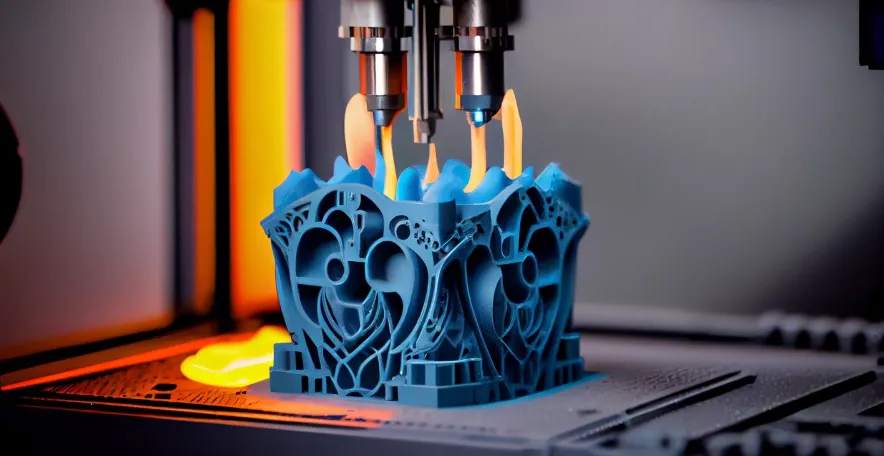
But materials are only part of the story. What truly sets leading platforms apart is geometric freedom. Intricate lattice structures, integrated assemblies, internal channels, things that once meant assembling a dozen separate components can now arrive as a single finished part. That’s not just manufacturing efficiency. That’s a fundamental design unlock.
Speed That Actually Changes Your Timeline
Think about the last time a product decision got stuck in a waiting loop. Tooling quotes. Vendor timelines. Approval chains. It adds up fast.
Online platforms have quietly demolished most of that friction. Same-day quoting is now standard. One-to-two day build times aren’t rare anymore; they’re expected. For teams running design sprints, that kind of turnaround doesn’t just save time; it completely changes how you think about iteration.
Here’s the part worth lingering on: you don’t need a single piece of hardware to access this. No capital investment, no maintenance schedules, no equipment sitting idle between projects. Upload your CAD file, place an order, and get on with your actual work. Remote 3D printing service providers even allow parallel builds, meaning you can run three or four design variants at once, get real feedback on all of them, and make a smarter call faster than you would with traditional methods.
A decade ago, that kind of parallel iteration was a big-company privilege. Now it’s just… Tuesday.
The Financial Case Is Stronger Than It Looks
Roughly over half of manufacturing firms are already integrating 3D printing into their prototyping workflows to cut development time. Cost is a huge part of why.
Traditional prototyping has a brutal upfront cost structure. Molds. Tooling. Labor hours for setup and tear-down. If your design changes, and it will, you’re often starting from scratch financially. Affordable online prototyping services flip that entirely.
There’s no tooling to pay for. No overproduction waste sitting on shelves. Additive manufacturing uses only the material a part actually requires, which means the process is leaner by design. And because most platforms let you order single pieces, you’re never pressured into bulk commitments before your design is even validated.
That last point matters more than people realize. Low minimums create breathing room, financial breathing room that lets your team take real creative risks. When a bold design choice costs almost nothing to test, you test it. And sometimes those “weird” ideas turn into breakthrough products.
Building Responsibly Without Slowing Down
Sustainability isn’t a checkbox anymore. For a growing number of companies, and the customers they’re trying to win, it’s a real consideration.
Here’s where additive manufacturing has a quiet but meaningful advantage. Unlike subtractive methods that cut and carve material away, 3D printing uses roughly 90% of what it starts with. That waste reduction supports environmental commitments without forcing any trade-off in speed or output quality. It’s genuinely better, not just marginally better.
On-demand production compounds this further. When you maintain digital files instead of physical inventory, you’re not stockpiling parts that might become obsolete the moment your design improves. You print what you need, when you need it. Market shifts, design pivots, and customer feedback don’t leave you holding a shelf full of wrong parts.
The Bottom Line
Online 3D printing has earned its place at the center of modern product development, not through marketing, but through genuine performance. Faster timelines, lower costs, broader material access, and a dramatically smaller environmental footprint are a rare combination in any category.
Whether you’re an independent inventor sketching out your first concept or a manufacturing team scaling up a validated product, the case for using online 3D printing prototyping services has never been clearer. Don’t be the team that gets there second.
Frequently Asked Questions
What are the real advantages and disadvantages of 3D printing for prototyping?
Advantages are significant: rapid manufacturing, on-demand production, reduced material waste, and genuine accessibility for smaller teams without large budgets. Disadvantages exist too: limited material options on some platforms, occasional post-processing complexity, intellectual property concerns around replicated designs, and slower speeds for especially large or intricate builds.
How does 3D design actually help the prototyping process?
Virtual simulation through 3D models lets engineers catch structural or functional problems before anyone spends money on physical parts. You find the flaws digitally, fix them quickly, and only commit to physical builds once the design holds up. Fewer expensive iterations. Faster validation.
How do I choose the right online 3D printing service for prototyping?
Look for a provider that offers a wide range of materials, reliable turnaround times, transparent pricing, and strong engineering support. The right service should match your prototype’s functional needs, whether that means high precision, durable materials, or rapid iteration. Choosing a partner with scalable capabilities also makes it easier to move from prototype testing to low-volume production without disruption.