
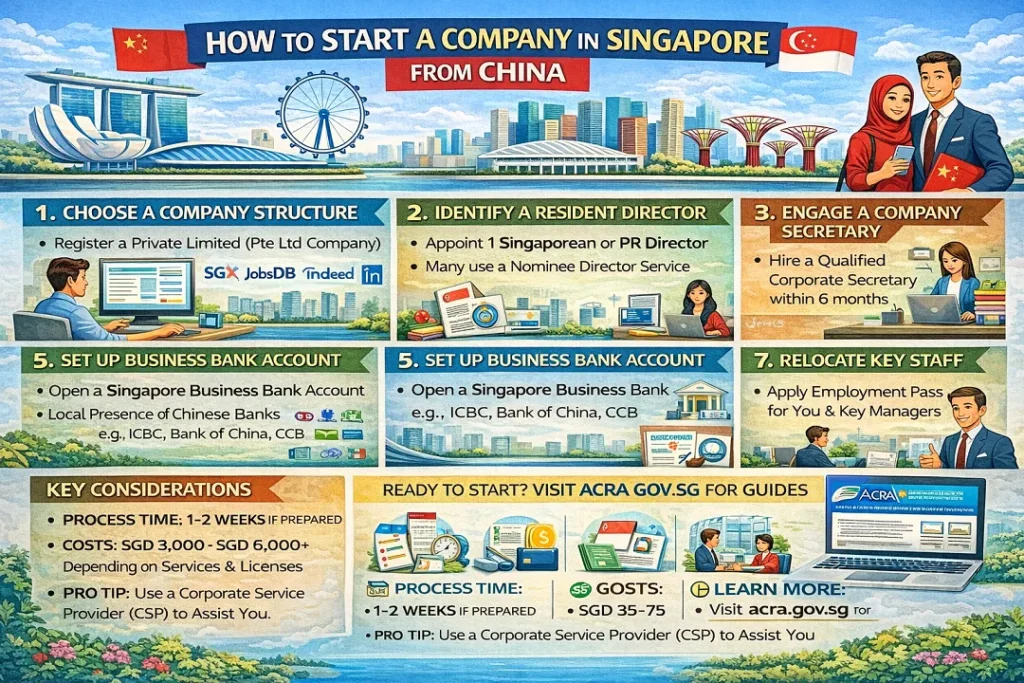
Understanding how to start a company in Singapore from China has become increasingly important for Chinese entrepreneurs and investors seeking international expansion. Singapore’s stable economy, strategic location in Southeast Asia, and business-friendly regulatory environment make it one of the most attractive destinations for cross-border company formation. For businesses looking to access global markets while operating in a trusted jurisdiction, Singapore offers a compelling platform.
This guide explains how to start a company in Singapore from China for foreign business owners, outlines the legal and procedural requirements, and walks through the step-by-step process of registering a company in Singapore as a foreigner. It also provides clarity on common misconceptions, including comparisons with how to open a company in China as a foreigner.
Why Singapore Is Attractive to Chinese Entrepreneurs
Singapore has long been a preferred gateway for Chinese businesses expanding overseas. One key reason is its strong legal framework, which ensures transparency, contract enforcement, and intellectual property protection. These elements reduce operational risk and provide confidence for foreign investors.
Another important factor is Singapore’s extensive network of free trade agreements and double taxation treaties, including agreements with China. This enables companies to operate efficiently across borders while optimising tax exposure. Combined with political stability and a pro-business government, Singapore continues to attract entrepreneurs from China who are looking for long-term growth.
Starting Business in Singapore as a Foreigner
Starting business in Singapore as a foreigner is legally permitted and relatively straightforward compared to many other countries. Foreigners are allowed to own 100 percent of a Singapore company in most industries, particularly when setting up a private limited company. This structure is the most popular choice due to its credibility, scalability, and limited liability protection.
While ownership is open, foreigners must comply with certain local requirements, such as appointing at least one locally resident director and ensuring regulatory compliance. These measures are designed to maintain corporate accountability while still supporting international entrepreneurship.
How to Start a Company in Singapore from China for Foreign Owners
When learning how to start a company in Singapore from China for foreign entrepreneurs, it is important to understand that physical presence in Singapore is not mandatory during incorporation. The entire registration process can be completed remotely through licensed corporate service providers.
However, if the Chinese business owner intends to relocate to Singapore and actively manage operations, an appropriate work pass will be required. This distinction allows flexibility for both overseas-managed companies and owner-operated businesses.
Step-by-Step Process to Register a Company in Singapore
The step-by-step process of starting a company in Singapore from China begins with selecting a suitable business structure. Most foreign entrepreneurs choose a private limited company due to its strong reputation and tax efficiency. Once the structure is decided, the next step is reserving a company name with Singapore’s regulatory authority. The name must be unique and compliant with naming guidelines.
After name approval, the company incorporation documents are prepared, including details of shareholders, directors, registered address, and business activities. For Chinese nationals, identity verification and due diligence checks are required as part of regulatory compliance. Once these documents are submitted, company registration is typically completed within a short timeframe.
Following incorporation, the company must complete post-registration requirements such as opening a corporate bank account, appointing a company secretary, and maintaining statutory records. These steps ensure the company operates legally and remains compliant with Singapore’s corporate regulations.
Registering a Company in Singapore as a Foreigner
Registering a company in Singapore as a foreigner involves adhering to local governance standards while enjoying significant operational freedom. Foreign shareholders can hold full ownership, but at least one director must be a Singapore resident, either a citizen, permanent resident, or employment pass holder.
Foreign entrepreneurs from China often engage professional corporate service firms to fulfil local directorship and compliance requirements. This approach simplifies the process and ensures adherence to regulatory obligations while allowing business owners to focus on strategy and expansion.
Corporate Banking and Financial Setup
After incorporation, opening a corporate bank account is a critical step. Singapore’s banking system is known for its robustness and global connectivity, making it suitable for international trade and cross-border transactions. Chinese business owners should be prepared to provide detailed business plans, source of funds documentation, and shareholder information during the account opening process.
While banking requirements are strict, they reflect Singapore’s commitment to financial integrity. Once established, companies benefit from efficient financial operations and global credibility.
Taxation and Compliance Considerations
Singapore offers a competitive corporate tax regime that appeals to foreign entrepreneurs. Corporate tax rates are relatively low, and there is no capital gains tax in most cases. Startups may also qualify for tax exemptions during their initial years, depending on eligibility.
Ongoing compliance includes annual filings, financial reporting, and tax submissions. These requirements are clearly defined, making compliance manageable with proper planning and professional support.
Comparing with How to Open a Company in China as a Foreigner
Understanding how to open a company in China as a foreigner helps highlight why many Chinese entrepreneurs prefer Singapore for international expansion. China’s company registration process for foreigners often involves more complex regulatory approvals, capital requirements, and sector restrictions.
In contrast, Singapore offers faster incorporation timelines, clearer regulations, and greater operational flexibility. This simplicity is a major reason Singapore is chosen as a holding company location or regional headquarters for businesses operating in Asia.
Business Opportunities After Incorporation
Once a company is established, Singapore provides access to regional and global markets. Many Chinese entrepreneurs use Singapore as a base for technology services, trading, consulting, logistics, and investment activities. The country’s reputation enhances credibility when dealing with international clients and partners.
Singapore’s startup ecosystem, government incentives, and access to funding further support growth and innovation for newly incorporated companies.
Common Challenges and How to Address Them
While the process is efficient, Chinese entrepreneurs should be aware of potential challenges such as banking compliance, cultural differences, and regulatory responsibilities. These challenges are manageable with proper guidance and realistic planning.
Engaging experienced corporate advisors can significantly reduce risks and ensure smooth operations from incorporation to expansion.
Final Thoughts
Understanding how to start a company in Singapore from China opens the door to significant international business opportunities. Singapore’s efficient registration process, strong legal framework, and global connectivity make it an ideal destination for Chinese entrepreneurs seeking stability and scalability.
By following the step-by-step process, meeting compliance requirements, and leveraging professional support, starting a business in Singapore can be both seamless and strategically rewarding. For foreign entrepreneurs looking beyond domestic markets, Singapore remains one of the world’s most trusted and accessible business hubs.
Frequently Asked Questions
How to start a company in Singapore from China without travelling?
Chinese entrepreneurs can complete the entire incorporation process remotely by appointing licensed corporate service providers in Singapore.
Is registering a company in Singapore as a foreigner allowed?
Yes, foreigners can legally own and operate companies in Singapore, subject to compliance with local director and regulatory requirements.
How long does it take to start a company in Singapore from China?
Once documentation is ready, incorporation is typically completed within a few business days.
Do Chinese business owners need a work pass to own a Singapore company?
A work pass is only required if the owner plans to live in Singapore and actively manage the business locally.
Is Singapore better than China for foreign company registration?
Singapore is often preferred for its simplicity, transparency, and international credibility, especially for global or regional operations.